Core Academics
Outside-The-Box Thinking selects core curricula through a rigorous, evidence-informed review for academic excellence, standards alignment, inclusive design, and their ability to help every learner turn deep knowledge into curiosity, creativity, and purposeful action.
EL Education started as an extension of Outward Bound and was called Expeditionary Learning.
The K–8 Language Arts curriculum is a content-rich, project-based literacy program in which students build reading, writing, speaking, listening, and language skills through compelling science, social studies, and literature topics.
Students engage with rich, authentic texts; investigate meaningful questions; collaborate; and apply their learning through culminating performance tasks for real audiences.
Complementary Learning Labs extend the module learning through hands-on inquiry, research, discussion, writing, and projects that deepen connections to science and social studies while giving students additional opportunities to explore, create, and apply knowledge. Each grade-level curriculum includes four content-based modules across the year; in K–5, Labs complement the core module lessons, and optional Life Science Modules provide additional instruction aligned with Next Generation Science Standards.
English Language Arts
Science and Social Studies
EL in Action:
Using Ashley Spires’ book, The Most Magnificent Thing, first-grade students examine tools, write about habits of character, reflect on the main character’s emotional regulation, and build their own magnificent thing that helps the school or classroom. Listen to the read-aloud and explore EL’s unit in the Learn More tab below.
Connected fieldwork may include visiting a working wood shop, a learning lab with inventors, or a walk about to find materials to upcycle.
Math for Every Learner
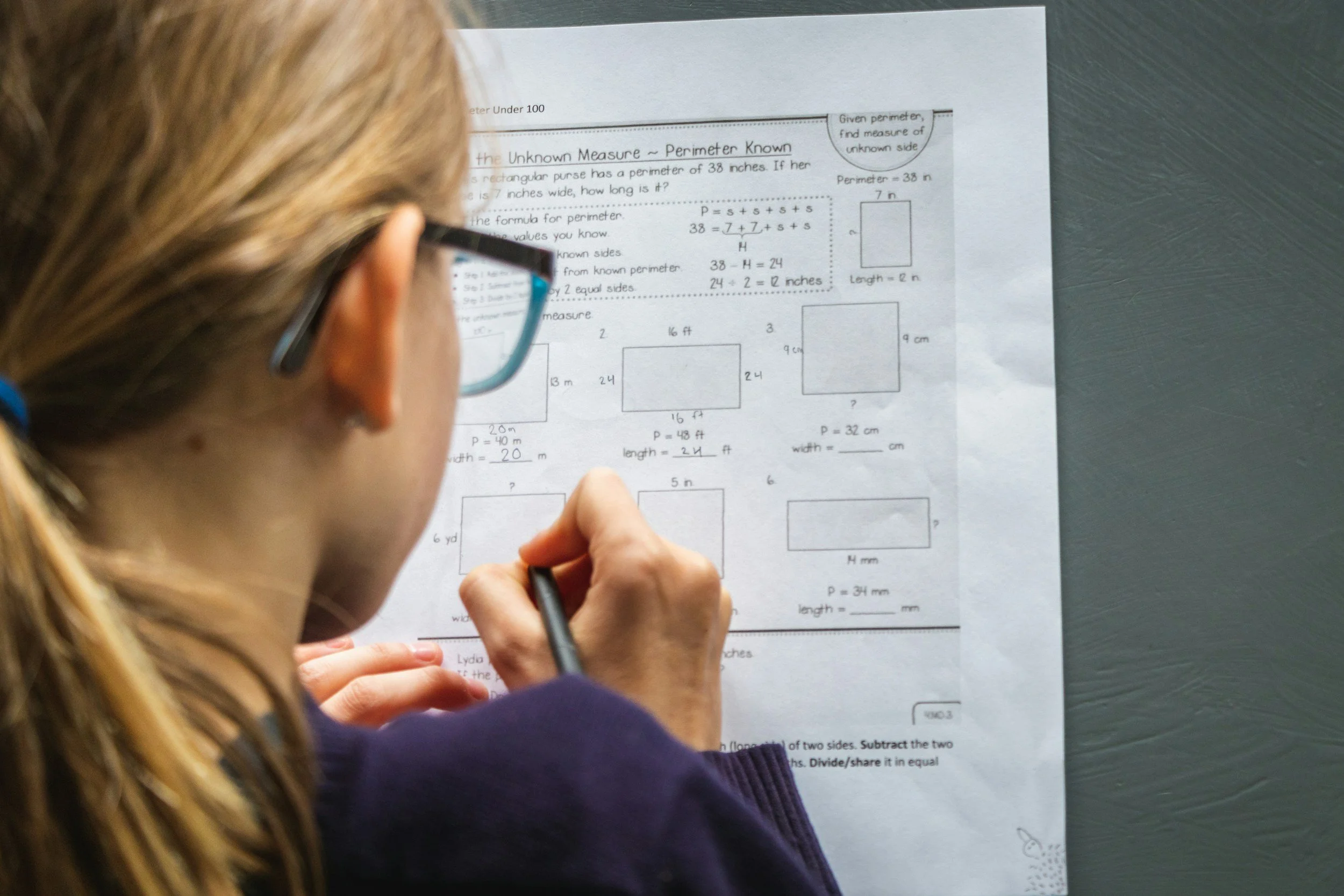
At OTB Thinking, every student is a mathematical thinker. We use inclusive learning practices so students can access complex ideas and communicate their understanding in different ways—through conversation, hands-on tools, drawings, diagrams, written explanations, technology, and real-world applications.
Teachers provide clear models, visual supports, structured discussion, multiple problem-solving pathways, and purposeful opportunities for students to learn from mistakes and revise their approach. This helps students build both mathematical knowledge and the executive-function skills that support planning, organization, persistence, flexible thinking, and collaboration.
We are deciding between Bridges Math, Amplify, and Illustrative Mathematics. Add your voice and help us decide what’s best for students.